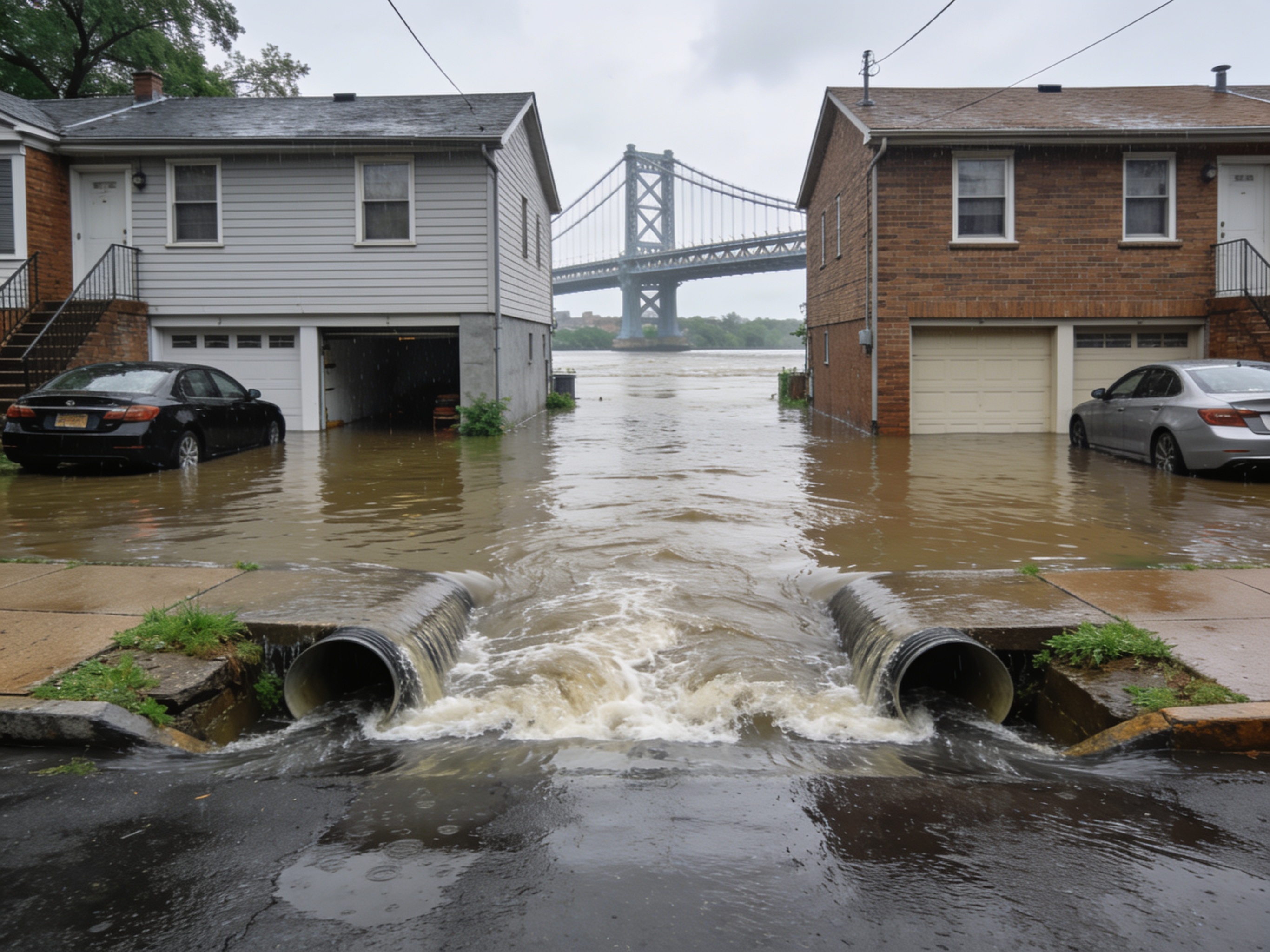
Warminster homes built from the 1950s through the 1970s sit on clay-heavy soils that hold water after heavy summer storms. When a water line breaks or a roof leaks during a July downpour, moisture quickly reaches finished basements along streets like Street Road and York Road. Our crew based at 3600 Drumore Dr travels up Route 232 or I-95 to reach these properties within the hour, pulling carpet and setting drying equipment before mold sets in.
Cold winters bring their own problems. Freezing temperatures in January and February often split pipes in crawlspaces and garages around Warminster Community Park and Munro Park. We cut out saturated subfloors in split-levels common to the area, then use moisture meters to confirm the slab is dry before any rebuild work begins. Homeowners on lots near Neshaminy Creek tributaries know standing water can linger for days after a nor’easter.
Access matters here. Narrow driveways and mature trees on many Warminster blocks mean we park the truck on the street and carry equipment by hand. We schedule around school traffic near Log College Middle School and William Tennent High School so the job does not block buses during morning hours.
Around Warminster
We regularly work near:
- 📍Warminster Community Park
- 📍Munro Park
- 📍Log College Middle School
- 📍William Tennent High School
- 📍Street Road and York Road intersection
Water Damage Restoration in Warminster — Local Notes
- •Clay soils around Warminster hold water longer than sandy ground farther south, so drying times run 20-30 percent longer on slab homes.
- •Many 1960s split-levels have finished lower levels below grade with no French drains, turning a small leak into full-room water damage.
- •Winter pipe bursts are common on north-facing walls exposed to wind off the Delaware; we prioritize these jobs when temperatures stay below freezing for several days.