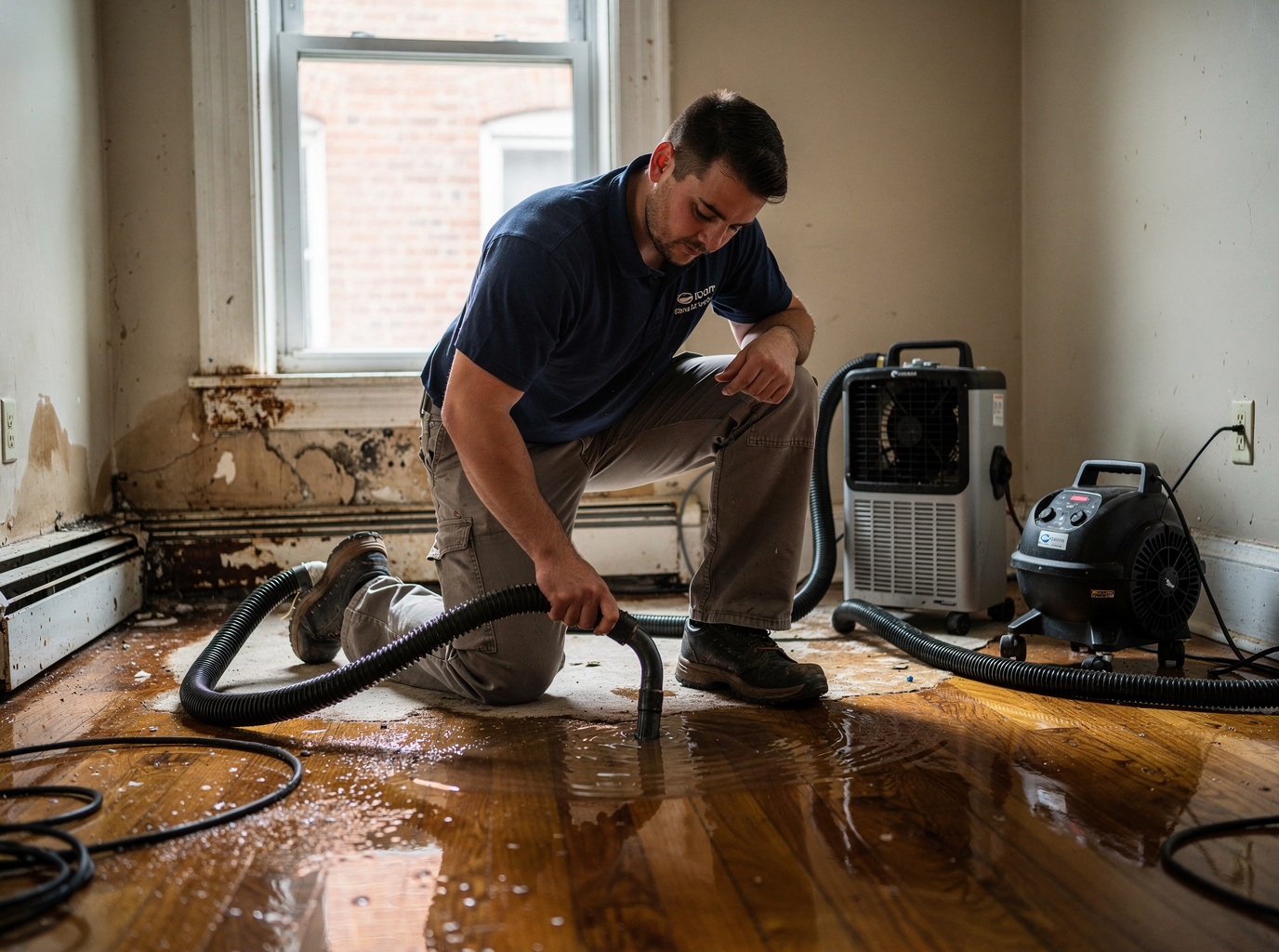
Philadelphia row homes built before 1950 in neighborhoods like Kensington and Northern Liberties often feature plaster over lath and brick foundations that trap moisture long after visible water is gone. Technicians must use moisture meters and thermal imaging to trace hidden saturation behind walls and under floors, especially after pipe bursts during winter freezes when temperatures drop below freezing. Skipping this step leads to recurring mold growth in humid summer conditions that follow.
Storm runoff from heavy summer rains frequently overwhelms older combined sewer systems in West Philadelphia and University City, pushing water into basements through foundation cracks and floor drains. Repair work here requires separating clean water extraction from any sewage backup, followed by antimicrobial treatment on affected joists and subfloors. Properties near the Schuylkill or Delaware rivers face additional groundwater pressure that can re-wet walls weeks after the initial event.
In multi-unit buildings common in Fishtown and Manayunk, water migrates downward through shared walls and ceilings, affecting units two or three floors below the source. Repair crews coordinate with property managers to isolate affected areas while maintaining access for residents, and they document moisture levels at every level to prevent disputes over responsibility. Drying times extend in these dense structures because airflow is limited compared to standalone houses.
Winter pipe bursts in unheated spaces such as Roxborough and Mount Airy attics create ice dams that release water suddenly when temperatures rise. Technicians prioritize removing standing water before it refreezes, then focus on drying insulation and rafters without disturbing original slate or cedar roofs that are difficult to replace. This sequence prevents structural rot that spreads quickly in the area's freeze-thaw cycles.
Technician insight
In Philadelphia, the thing that catches most people out with Water Damage Repair is how quickly water travels through brick party walls and plaster in 19th-century row homes in Kensington or South Philadelphia. A small ceiling leak upstairs can saturate joists two floors down before anyone notices, and the freeze-thaw cycles from our cold winters make the damage spread faster than in newer construction.
Hidden Leak in South Philadelphia Row Home
Water stains appeared on a first-floor ceiling in a South Philadelphia row home after a bathroom pipe joint failed upstairs. Inspection revealed saturation in plaster walls and subfloor extending into the basement. Crews extracted water, dried cavities over five days, and replaced affected plaster sections while preserving original trim.
Water Damage Repair Services We Offer
✓Burst Pipe Water Extraction
Rapid removal of water from burst pipes in Philadelphia row homes, followed by targeted drying to protect plaster walls and hardwood floors common in Center City and Fishtown.
✓Basement Flood Restoration
Extraction and drying after stormwater or sewer backup in South Philadelphia and West Philadelphia basements, including treatment of brick foundations and joists.
✓Ceiling and Wall Leak Repair
Moisture mapping and drying behind ceilings and walls after roof or plumbing leaks, preventing mold in older plaster construction found in Germantown and Northern Liberties.
✓Storm Damage Water Cleanup
Cleanup and drying after heavy rain events affecting properties near the Schuylkill River and in University City, with separation of clean versus contaminated water.
✓Attic Ice Dam Drying
Removal of water from winter ice dam failures in Roxborough and Manayunk attics, protecting insulation and rafters in older homes.
Water Damage Repair Cost in Philadelphia, PA
| Service | Typical Range | What Affects It |
|---|---|---|
| Initial Moisture Assessment | $175–$350 | Higher in multi-story row homes with limited access in neighborhoods like Fishtown. |
| Water Extraction | $400–$900 | Depends on volume and whether sewage is involved in older combined sewer areas. |
| Drying Equipment Rental | $250–$600 per week | Extended in humid summer months or dense brick construction. |
| Ceiling Or Wall Cavity Drying | $300–$750 | Varies with plaster and lath removal needs in pre-1950 homes. |
Ranges are typical for Philadelphia, PA and confirmed with an exact written quote before any work starts.
How it works
- 1
On-Site Assessment
Technicians inspect the property, map moisture with meters, and identify the water source while documenting affected materials in Philadelphia row homes.
- 2
Water Removal
Standing water is extracted using pumps and vacuums, with separation of clean and contaminated water based on location and source.
- 3
Drying And Dehumidification
Industrial air movers and dehumidifiers are placed to dry walls, floors, and cavities, with daily monitoring until moisture levels return to normal.
- 4
Repair And Restoration
Damaged materials are removed or repaired, followed by final cleaning and verification that hidden moisture has been eliminated.
Pricing
Upfront quotes after inspection reflect property age, water category, and affected square footage in Philadelphia row homes.