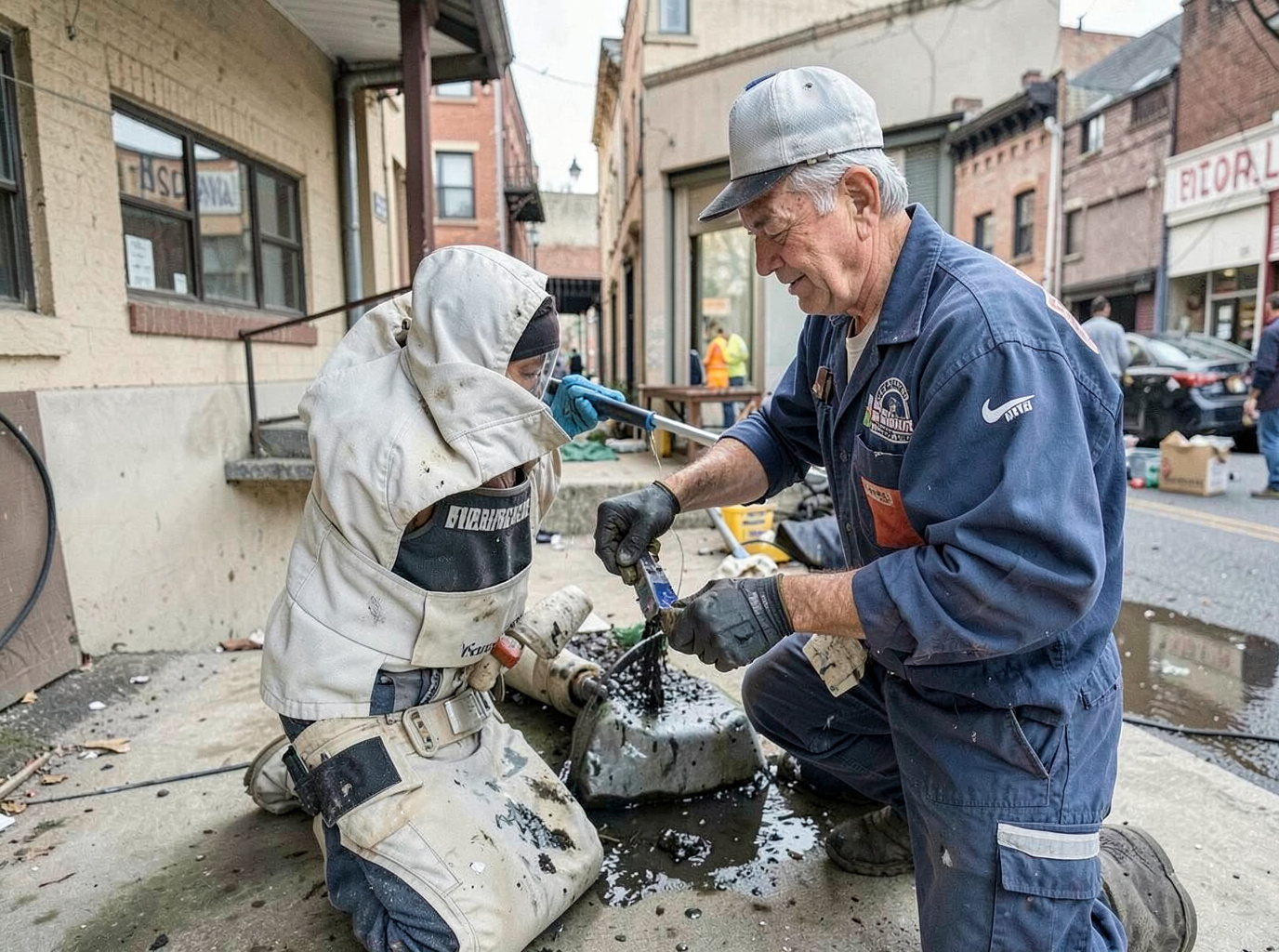
Philadelphia's dense stock of 19th- and early 20th-century row homes means water from a roof leak or burst pipe often travels laterally through shared brick walls and plaster, reaching units two or three doors away before anyone notices. Crews working in neighborhoods like Fishtown or Northern Liberties routinely open multiple ceilings and check adjoining basements because visible damage rarely shows the full extent. Older cast-iron stacks and galvanized lines common in these blocks corrode from the inside, so a small drip can become a full-volume failure once temperatures swing.
The region's humid subtropical pattern brings heavy summer thunderstorms that overwhelm downspouts and grading in South Philadelphia and Kensington, followed by winter freezes that split supply lines in unheated spaces. Properties near the Delaware or Schuylkill often sit on fill or clay that holds water against foundations for days after the rain stops. Restoration plans must account for this retained moisture plus limited ventilation in tight row-house layouts, which slows natural drying and raises the risk of hidden mold behind lath and plaster.
Technicians dispatched from the 3600 Drumore Drive location reach Center City, University City, and Manayunk within the posted hours, focusing first on stopping active leaks and extracting standing water before it migrates into finished lower levels. Documentation of pre-existing conditions is essential in these older blocks because insurance adjusters frequently question whether damage predates the reported event. Final drying verification uses moisture meters on multiple wall layers rather than surface readings alone.
Technician insight
In Philadelphia, the thing that catches most people out with water damage restoration is how quickly moisture moves through the brick party walls in pre-war row homes, especially after a winter pipe burst or summer storm. A leak that starts in one Kensington basement can reach the next house before the homeowner even sees water, and standard surface checks miss it every time.
South Philadelphia Row Home Flood
A summer storm sent water through a clogged downspout and into a finished basement on a block near Citizens Bank Park. Inspection showed water had wicked up plaster on two shared walls. Extraction and targeted drying prevented spread into the neighboring unit; only the affected lower level required new baseboard and flooring.
Water Damage Restoration Services We Offer
✓Emergency Water Extraction
Rapid removal of standing water from basements and first floors using truck-mounted pumps suited to Philadelphia row-home access limits.
✓Structural Drying and Dehumidification
Placement of commercial air movers and dehumidifiers to pull moisture from plaster, brick, and subfloors common in North and West Philadelphia homes.
✓Basement Flood Cleanup
Clearing water, silt, and debris from below-grade spaces in South Philadelphia and Kensington where poor grading and combined sewers increase flood frequency.
✓Sewage Backup Restoration
Containment, removal, and disinfection after municipal sewer backups that affect older lines feeding into the city's combined system.
✓Ceiling and Wall Water Damage Repair
Opening, drying, and replacing damaged plaster or drywall while tracing moisture paths through shared walls in Center City and Fishtown blocks.
Water Damage Restoration Cost in Philadelphia, PA
| Service | Typical Range | What Affects It |
|---|---|---|
| Initial Assessment | $125–$275 | Varies by number of levels and access to shared walls |
| Water Extraction | $450–$950 | Depends on volume and whether sewage is involved |
| Drying Equipment Rental | $300–$700 | Daily rate based on square footage and duration needed |
| Plaster Or Drywall Repair | $600–$1,800 | Affected by extent of hidden moisture and wall type |
Ranges are typical for Philadelphia, PA and confirmed with an exact written quote before any work starts.
How it works
- 1
On-Site Assessment
Technicians inspect all affected levels, check adjoining properties, and document moisture readings before any work begins.
- 2
Water Removal
Pumps and extractors clear standing water while protecting finished surfaces typical of Philadelphia row homes.
- 3
Drying And Monitoring
Equipment runs until meters confirm acceptable moisture levels in walls, floors, and shared masonry.
- 4
Restoration Work
Repairs restore affected areas to pre-loss condition using materials matched to the home's original construction.
Pricing
Upfront quotes provided after inspection during posted business hours.