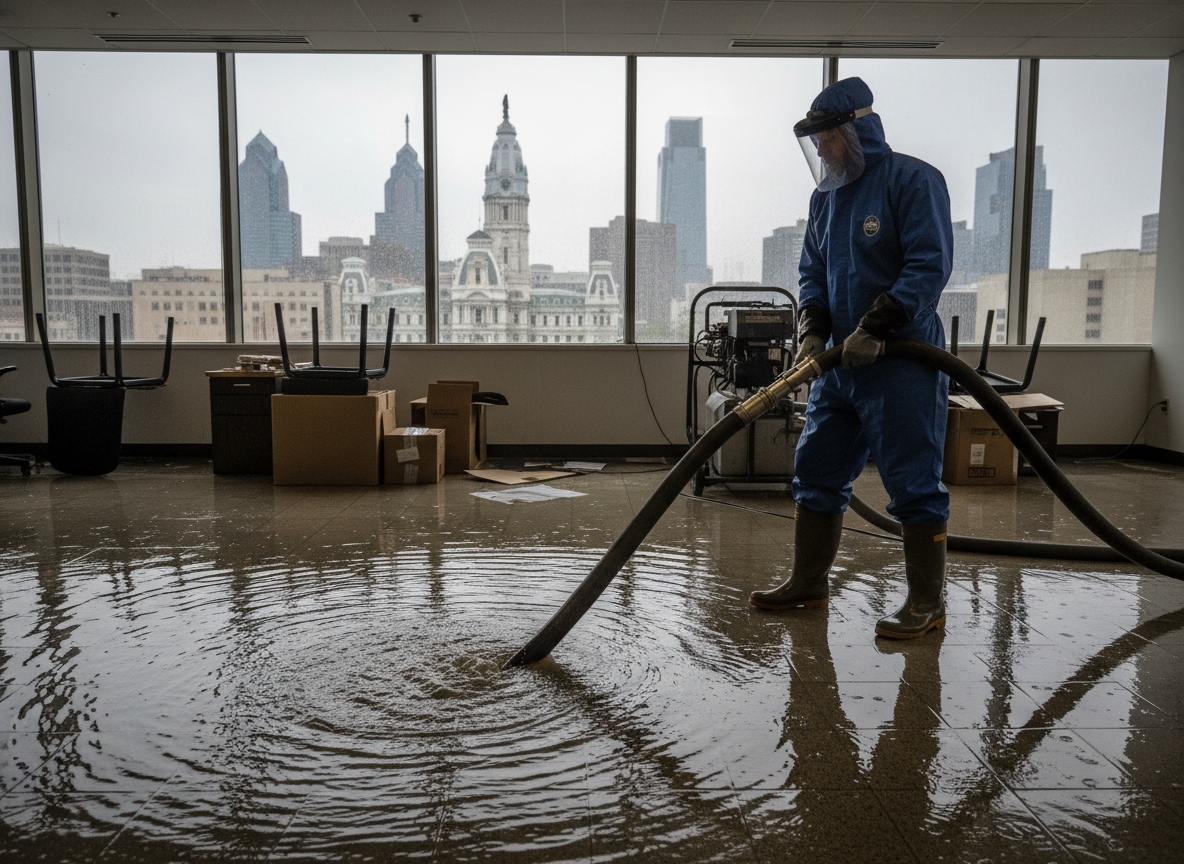
Philadelphia's older brick row homes in South Philadelphia, Kensington, and Germantown often allow water to migrate through shared walls and plaster lath once a pipe bursts or a roof leak starts. Emergency crews must isolate units quickly because moisture travels horizontally into neighboring properties before extraction equipment arrives. Hot humid summers increase the speed of secondary damage while cold winter snaps can freeze and split supply lines in unheated basements common in West Philadelphia and Roxborough.
Standing water on slab foundations in University City or Manayunk basements frequently sits against exterior walls where soil retains moisture year-round. Technicians use submersible pumps and weighted barriers to pull water away from load-bearing brick before it undermines footings. Reading Terminal Market area commercial spaces add another layer because floor drains often tie into combined sewers that back up during heavy rain.
After initial removal, crews document hidden pockets behind built-in cabinetry and under hardwood floors typical of Northern Liberties and Fishtown homes. Leaving even small volumes allows mold to form within 48 hours in the region's humid subtropical conditions, especially when summer dew points stay elevated. Proper sequencing prevents the need to reopen finished spaces later.
Technician insight
In Philadelphia, the thing that catches most people out with Emergency Water Removal is how fast water moves through the brick party walls in 1920s row homes in Kensington or South Philadelphia during a summer storm. Once it crosses into the next unit you are suddenly coordinating with two owners and the job doubles.
Burst Supply Line in a Roxborough Row Home
A cold snap split a main line feeding the second floor. Water traveled down interior walls and pooled in the finished basement. Crews pumped out 800 gallons, isolated the shared wall section, and set drying before moisture reached the neighboring property.
Emergency Water Removal Services We Offer
✓Basement Flood Extraction
Pump and remove standing water from Philadelphia row home basements before it reaches electrical panels or shared foundation walls.
✓Ceiling and Attic Water Removal
Extract water trapped above plaster ceilings in older Center City and Mount Airy homes to stop collapse and hidden saturation.
✓Burst Pipe Emergency Extraction
Isolate and remove water from supply line failures common in North Philadelphia and Germantown properties during winter freezes.
✓Sewer Backup Water Removal
Clear contaminated water from combined sewer overflows that affect low-lying blocks near the Schuylkill in University City and Manayunk.
✓Appliance Leak Extraction
Remove water from washing machine or water heater failures that spread across finished floors in Fishtown and Northern Liberties row homes.
Emergency Water Removal Cost in Philadelphia, PA
| Service | Typical Range | What Affects It |
|---|---|---|
| Small area extraction (under 500 sq ft) | $250–$600 | Single room or shallow basement water |
| Multi-room residential extraction | $600–$1,400 | Row home with water across two floors |
| Contaminated water removal | $800–$2,000 | Sewer or appliance discharge requiring extra PPE |
| After-hours or weekend response | Additional $150–$300 | Calls outside Mon–Fri 8–6 or Sat 9–2 |
Ranges are typical for Philadelphia, PA and confirmed with an exact written quote before any work starts.
How it works
- 1
Arrival And Safety Assessment
Technicians arrive, shut off water sources, and check for electrical hazards in the affected Philadelphia property.
- 2
Standing Water Extraction
Submersible pumps and truck-mounted units pull bulk water while barriers contain spread into adjacent rooms or neighboring units.
- 3
Hidden Moisture Detection
Moisture meters locate water behind walls and under floors typical in older Philadelphia construction.
- 4
Initial Containment And Drying Setup
Air movers and dehumidifiers begin drying while crews document conditions for insurance.
Pricing
Pricing varies by volume of water, number of affected rooms, and whether contamination is present.