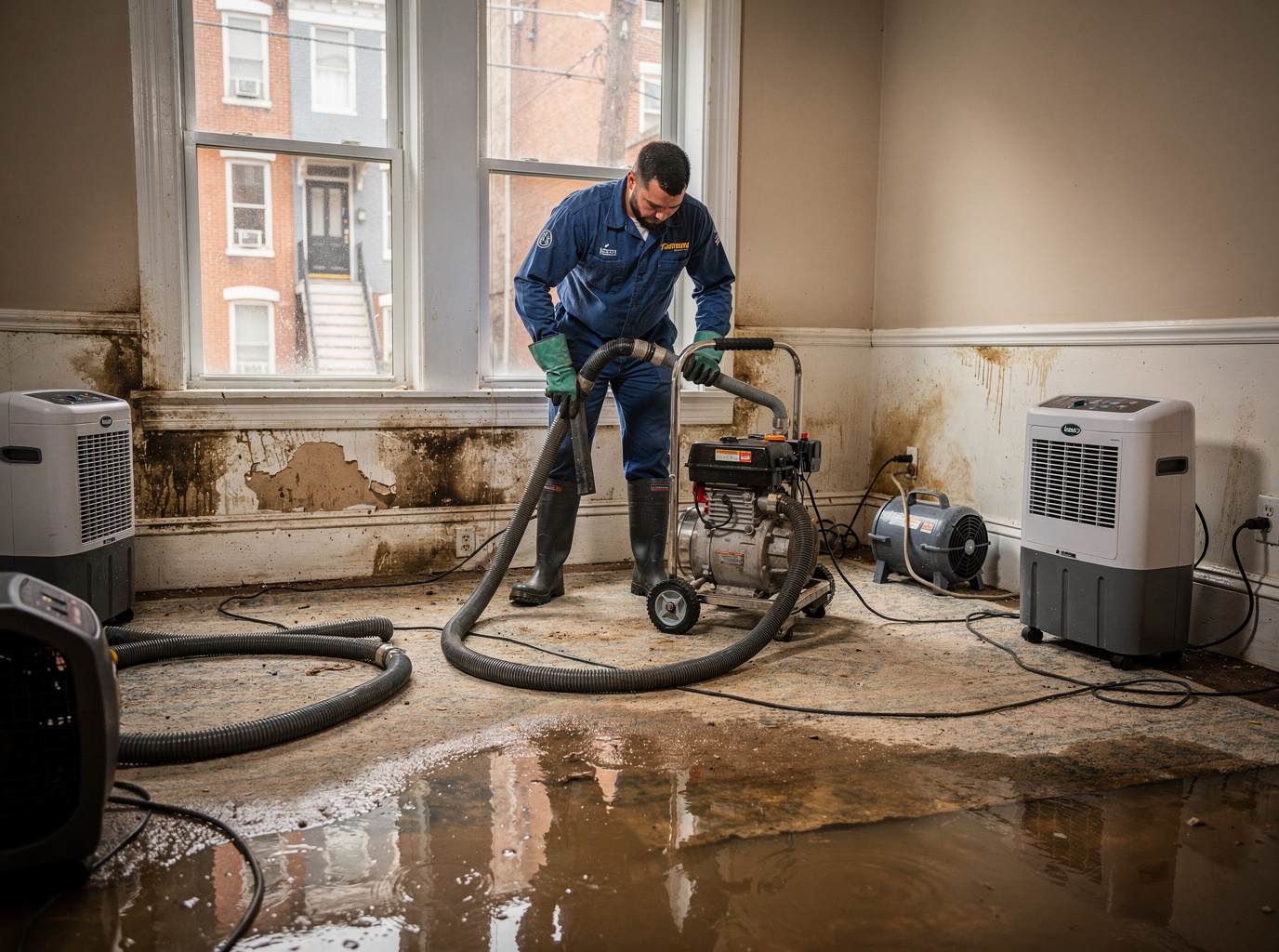
Philadelphia row homes built before 1950 often have plaster walls and tight crawl spaces that trap moisture after a pipe burst or roof leak. In humid summers the air already carries high moisture levels, so standing water in a South Philadelphia basement can turn into visible mold within 48 hours. Technicians must pull baseboards early and use moisture meters on brick foundations common in neighborhoods like Kensington and Northern Liberties to find hidden saturation before it spreads to shared walls.
Winter freezes bring their own problems. When temperatures drop, supply lines in unheated Roxborough and Mount Airy homes crack and release water that travels along joists into finished spaces below. Restoration crews focus on directional drying toward exterior walls to avoid pushing moisture into neighboring units. Extraction equipment must fit through narrow stairwells typical of these older properties while still removing enough water to keep insurance adjusters satisfied.
Heavy summer storms can overwhelm combined sewer systems in West Philadelphia and University City. When floodwater enters through basement windows it often carries silt from nearby streets. Restoration teams separate salvageable hardwood from saturated subfloors quickly because prolonged contact with river silt accelerates cupping. Dehumidifiers run longer here than in newer construction because the dense brick and stone retain heat and humidity well into the night.
Service calls also reach nearby cities such as Camden and Trenton when customers need coordinated drying across state lines. Crews document every step with photos for carriers because Philadelphia insurance claims frequently involve multi-unit buildings where water crosses property lines.
Technician insight
In Philadelphia the thing that catches most people out with water damage restoration is how quickly moisture travels through plaster and into the party wall of the next row home, especially during our humid summers. You have to pull trim and check behind cabinets on day one or the job doubles when the neighbor files a claim.
Fishtown Row Home Pipe Burst
A supply line froze and burst on the second floor of a 1920s row home. Water traveled down interior walls into the kitchen below and began wicking into the neighboring unit. Crews extracted water the same day, opened walls on both sides of the party wall, and ran drying equipment for five days until readings matched the unaffected rooms. The shared wall stayed intact and both homeowners returned to normal use without further claims.
Water Damage Restoration Service Services We Offer
✓Emergency Water Extraction
Rapid removal of standing water from basements and first floors using portable pumps sized for row-home access.
✓Structural Drying and Dehumidification
Industrial air movers and dehumidifiers placed to dry plaster, joists and brick foundations without damaging shared walls.
✓Basement Water Damage Repair
Removal of affected drywall, insulation and flooring followed by antimicrobial treatment in older Philadelphia basements.
✓Sewage Cleanup and Restoration
Full containment and removal of contaminated water from combined sewer backups common after heavy rains in South Philadelphia.
✓Mold Remediation After Water Damage
HEPA vacuuming and removal of growth triggered by summer humidity or winter pipe failures in Fishtown and Kensington homes.
✓Hardwood Floor Restoration
Drying and refinishing of oak floors in Center City and Northern Liberties row homes before cupping becomes permanent.
Water Damage Restoration Service Cost in Philadelphia, PA
| Service | Typical Range | What Affects It |
|---|---|---|
| Water Extraction | $250–$750 | Varies by volume and number of rooms; higher in multi-story row homes with limited access. |
| Full Structural Drying | $600–$1,800 | Includes equipment rental and monitoring; longer runs needed in humid summer months. |
| Basement Mold Remediation | $800–$2,200 | Depends on square footage and whether plaster or drywall must be removed. |
| Hardwood Floor Drying | $400–$1,100 | Higher when subfloor also requires treatment in pre-1950 homes. |
Ranges are typical for Philadelphia, PA and confirmed with an exact written quote before any work starts.
How it works
- 1
On-Site Assessment
Technician inspects affected rooms, checks moisture levels in walls and floors, and notes any shared-wall risks typical in Philadelphia row homes.
- 2
Water Extraction
Portable pumps and wands remove standing water while protecting narrow hallways and stairs common in older neighborhoods.
- 3
Drying And Monitoring
Air movers and dehumidifiers run with daily moisture readings until levels match unaffected areas in the same building.
- 4
Restoration And Repairs
Replace damaged materials, treat surfaces, and return the property to pre-loss condition with minimal disruption to neighbors.
Pricing
Upfront quotes provided after inspection; final cost depends on water volume, affected materials and drying time required.