2026-11-03 · Tom Rossi
How to Handle Burst Pipes in Philadelphia Row Homes During Winter Freezes
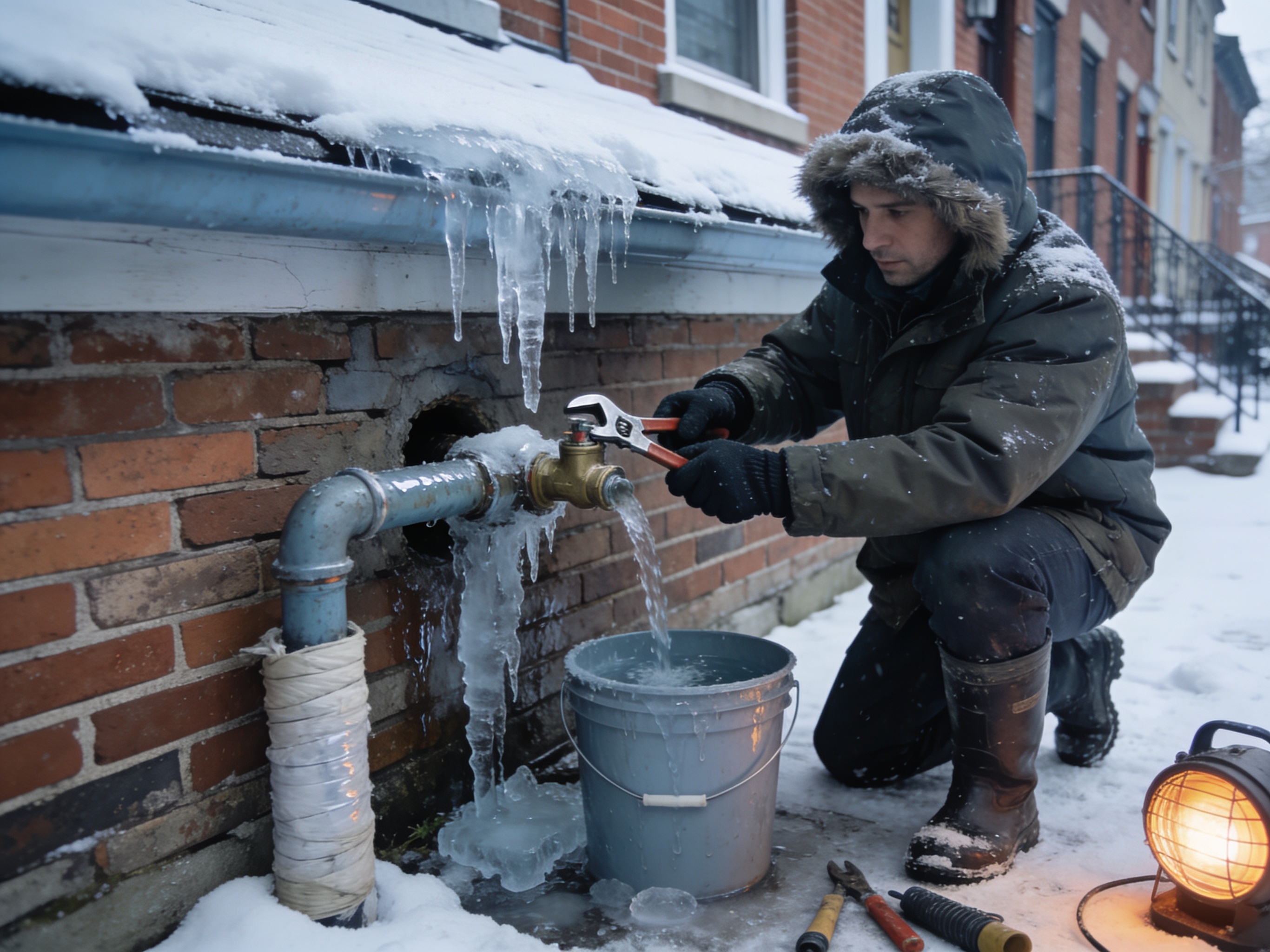
When a pipe bursts in a Philadelphia row home during a winter freeze, shut off the main water valve at once and contact a restoration team the same day to keep total costs between $3,000 and $9,000 for most Center City and South Philadelphia properties. Older row homes in neighborhoods such as Fishtown, Kensington, and Northern Liberties often have galvanized or copper lines installed before 1950 that expand and crack when temperatures drop below 20°F for several nights. The humid subtropical climate brings sudden cold snaps that catch uninsulated pipes in basements and exterior walls, while narrow shared walls limit airflow and trap moisture once water escapes.
Identifying Vulnerabilities in Philadelphia Row Homes
Philadelphia row homes built between 1920 and 1940 feature stacked plumbing runs along party walls and limited crawl space, making them prone to freeze damage when exterior temperatures fall. Homes in West Philadelphia and Germantown commonly have cast-iron waste lines paired with copper supply lines that corrode over decades and split under ice pressure. Manayunk and Roxborough properties sit on sloped terrain where water from a burst line flows toward lower foundations, saturating brick and mortar that then spalls. University City and Mount Airy houses often retain original knob-and-tube wiring near pipes, raising secondary electrical risks once drywall becomes saturated.
Recognizing Early Signs During Cold Snaps
Homeowners notice reduced water pressure first when a line begins to freeze, followed by visible frost on exposed pipes in basements near the Liberty Bell Center or Independence Hall districts. A sudden drop in temperature below 15°F for more than 48 hours often precedes the telltale hissing or dripping sound behind walls in South Philadelphia row homes. Discolored water or unexplained ceiling stains in North Philadelphia and Fishtown properties signal that ice has already expanded and cracked a joint. Checking the main shutoff valve location before winter arrives prevents delays when a freeze hits.
Immediate Containment Steps
Locate and close the main shutoff valve, typically found near the front wall in the basement of most Philadelphia row homes, then open faucets on upper floors to drain remaining pressure. Move furniture and belongings away from affected walls in Kensington or Northern Liberties homes to avoid secondary damage to hardwood floors. Document the water line with photos before extraction begins, noting the exact location relative to the Philadelphia Museum of Art or Benjamin Franklin Parkway for insurance reference. Avoid using household fans until standing water is removed, as they can spread mold spores in the humid local climate.
Professional Water Removal and Drying
Technicians extract standing water with truck-mounted pumps sized for row-home basements, then deploy air movers and dehumidifiers calibrated for 60–70% relative humidity typical in Philadelphia winters. In pre-war buildings, moisture meters check brick and plaster that retain water longer than modern drywall. Water Damage Restoration teams coordinate with Emergency Water Removal crews to reach properties in University City or Manayunk within two hours of the initial call. Drying times average 3–5 days when walls are opened to allow airflow behind lath and plaster.
Long-Term Prevention for Local Homes
Insulate exposed pipes with foam sleeves rated for temperatures down to 0°F and install heat tape on runs in unheated basements common in Germantown and Mount Airy. Replacing galvanized sections with PEX during a Water Damage Repair project adds flexibility that resists future freeze expansion. Homeowners in Roxborough and Chestnut Hill can add exterior-grade insulation to rear walls where pipes run closest to the street. Reviewing the Cost Factors for Water Damage Restoration in Pre-War Philadelphia Buildings helps plan upgrades before the next cold front arrives from Trenton or Allentown.