2026-11-03 · Tom Rossi
What Philadelphia Homeowners Should Know About Stormwater Flooding Near the Schuylkill
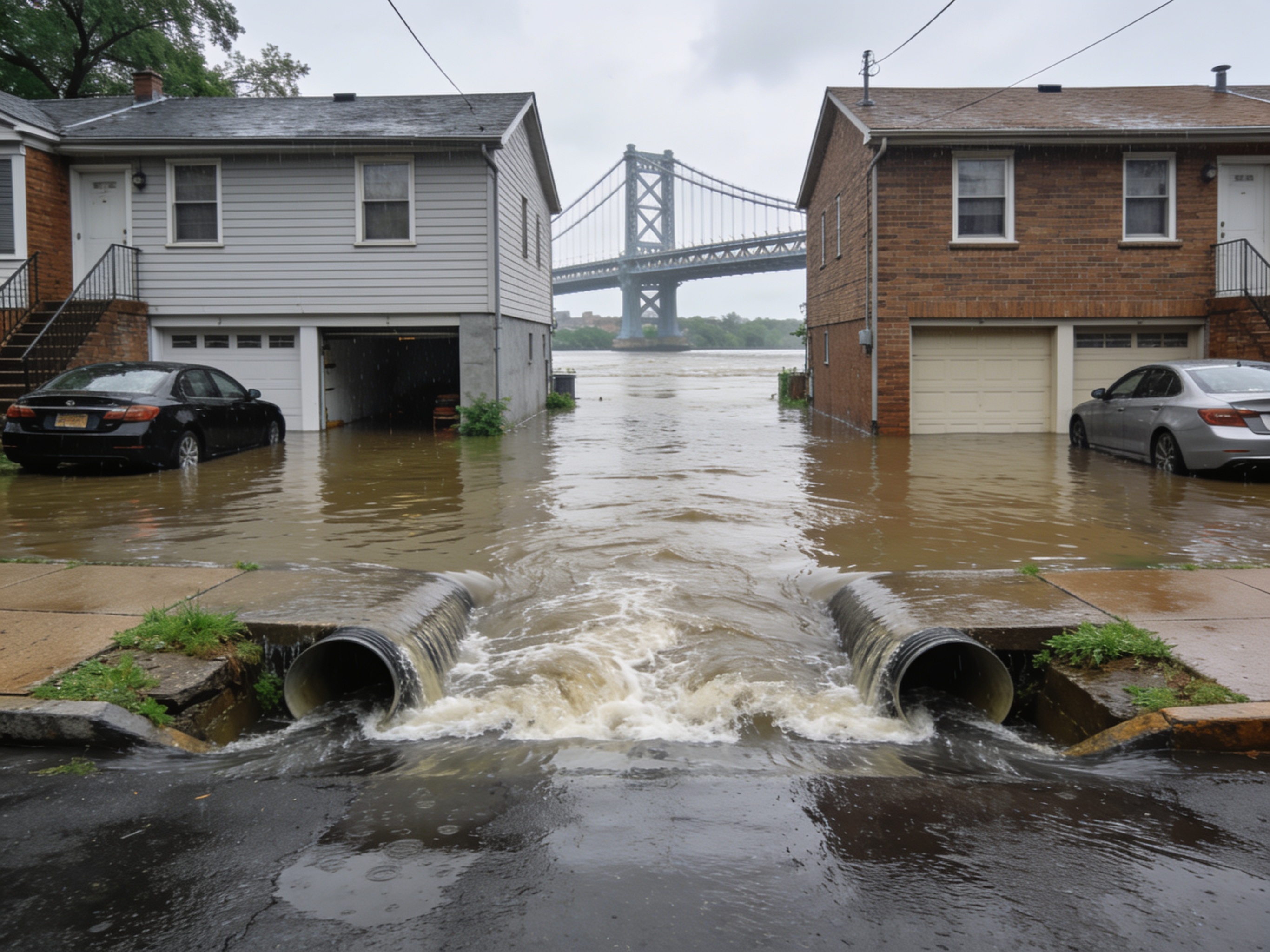
Stormwater flooding near the Schuylkill often rises 2-4 feet in low-lying blocks of Manayunk and University City when 2 inches of rain falls in under an hour, pushing water through basement windows and foundation cracks in pre-war row homes.
Understanding the Schuylkill River's Flood Dynamics
The Schuylkill runs through West Philadelphia, University City, and Manayunk before reaching Center City. Its watershed collects runoff from steep slopes in Roxborough and Germantown that funnels quickly into the river during storms. Combined sewer overflows at multiple outfalls near the river release stormwater mixed with sewage when capacity is exceeded. Row homes built before 1940 sit on shallow foundations with limited grading, so water pools against brick walls instead of draining to the street. Homeowners in these blocks notice water entering through coal chutes and utility penetrations first because those openings sit below sidewalk level.
How Philadelphia's Climate and Infrastructure Contribute
Philadelphia's humid subtropical climate brings 40-45 inches of annual precipitation, with peak rainfall in July and August that coincides with afternoon thunderstorms. Cold winters add snowmelt in February and March that saturates already wet ground along the riverbanks. The combined sewer network, installed over a century ago, routes both rainwater and household waste through the same pipes, so any heavy event backs up into basements from South Philadelphia to Northern Liberties. Streets in Fishtown and Kensington slope toward the river, accelerating flow into lower neighborhoods. These patterns repeat every 3-5 years with measurable flooding in the same blocks.
Common Impacts on Local Homes and Properties
Water enters through mortar joints in stone foundations common in Mount Airy and Germantown homes, saturating plaster walls and hardwood floors within hours. In Manayunk row homes, finished basements near the river lose drywall up to 4 feet high after each major event. Electrical panels mounted low on walls short out when water reaches 12 inches, forcing temporary power shutoffs. Nearby areas such as Camden across the Delaware see similar river-influenced flooding, though Philadelphia's denser row-house layout channels water more directly into individual properties.
Steps Homeowners Can Take to Mitigate Risks
Install backflow preventers on main sewer lines and grade soil 6 inches away from foundations within the first 10 feet. Seal utility penetrations with hydraulic cement rated for constant moisture exposure. Elevate furnaces and water heaters onto 18-inch platforms in flood-prone basements of University City homes. Clear street drains weekly during fall leaf season to reduce surface ponding that feeds into the Schuylkill. Check insurance policies for sewer backup riders, as standard homeowners coverage often excludes this source.
When Professional Water Damage Restoration Becomes Necessary
Once water sits longer than 48 hours, mold growth begins on organic materials inside walls. Water Damage Restoration crews use moisture meters to locate hidden saturation behind brick in pre-war buildings. Water Damage Repair focuses on removing affected plaster and subfloors before reinstalling with mold-resistant materials. For winter freeze events that crack pipes, review the related guidance in How to Handle Burst Pipes in Philadelphia Row Homes During Winter Freezes. Cost factors specific to older Philadelphia structures appear in Cost Factors for Water Damage Restoration in Pre-War Philadelphia Buildings. Call 215-555-0123 during business hours Monday through Friday 8am-6pm or Saturday 9am-2pm if standing water reaches electrical outlets.